
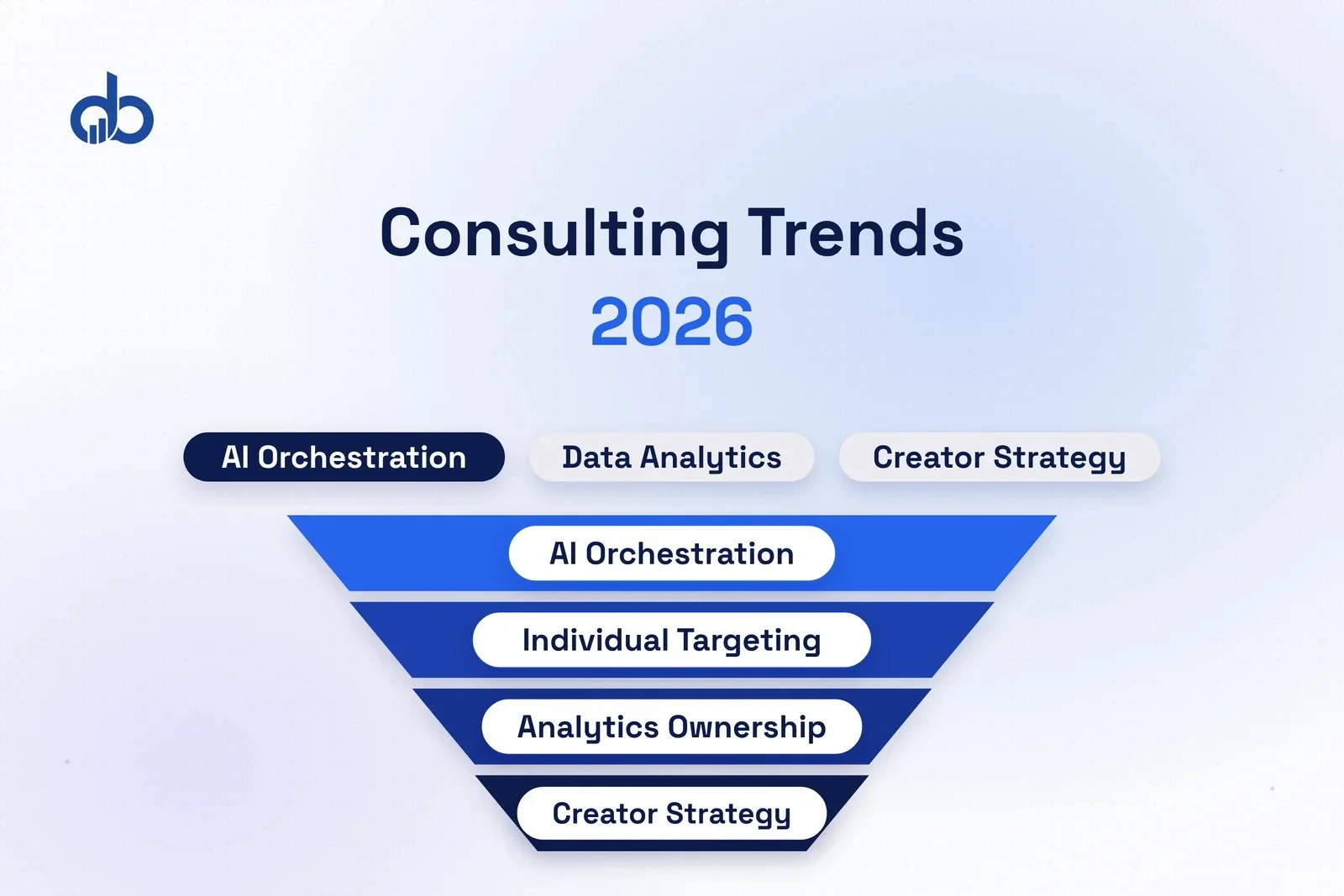
The marketing strategy consulting market is worth $36.65 billion in 2026, growing at 4.42% annually. That number signals strong demand. What it doesn’t capture is how fundamentally the work has changed.
Most businesses working with a marketing consultant today are paying for a strategy built on 2023 assumptions. The tools are different. The channels have shifted. And the data infrastructure required to compete has scaled beyond what a quarterly audit and a slide deck can address. Consultants who haven’t restructured their delivery model around these realities are still billing for recommendations their clients can’t fully action.
There are five emerging trends reshaping marketing strategy consulting in 2026. But here’s what most trend articles get wrong: they treat these as tools to adopt individually. The real competitive advantage is restructuring how the consulting engagement works. That shift is harder than the technology itself. And it’s what separates compounding results from single-cycle lift.
What Separates Forward-Looking Marketing Strategy Consulting from Tactical Advice
The most common failure pattern in marketing strategy consulting looks like this: a consultant delivers an excellent strategy document, includes current research, references the right emerging trends, and hands the client a 90-day plan. Six months later, the client’s still on page 3 of that plan. The market has shifted, and the original recommendations are already dated.
The consultants producing consistent results in 2026 haven’t just adopted new tools. They’ve restructured around a different model entirely. Instead of delivering strategy and stepping back, they own parts of the measurement and optimization loop on an ongoing basis. They’re accountable partners in the data pipeline that makes modern marketing work, not just advisors.
Most competitor articles on this topic never surface that structural gap. They cover what’s changing, but not how the consulting relationship itself must change to capture value from these trends.
What to look for from a current-generation consultant:
- Do they bring their own attribution and tracking infrastructure, or do they rely on your existing setup?
- Can they show you where in your funnel the data quality breaks down before recommending budget allocation?
- Do they have direct experience embedding AI into campaign workflows, not just recommending platforms?
- Does their retainer include measurement ownership, or are they billing separately for each deliverable?
Not sure if your current marketing strategy is built for 2026? Get Free Marketing Audit
Pro tip: Ask your consultant to walk you through exactly how they’d attribute a sale that touched four channels before converting. If they can’t answer that in concrete terms, they’re not running the measurement infrastructure your strategy needs. The answer to this question tells you more than any proposal.
The framework for evaluating marketing strategy consulting has shifted from “who gives the best advice” to “who’s accountable for the implementation and measurement that makes the advice work.” That shift runs through every trend below.
Trend 1: AI-Powered Consulting Tools Move from Task Automation to Campaign Orchestration
Eighty-seven percent of marketers now use generative AI in at least one workflow, up from 51% in 2024. That headline figure gets cited constantly. But it doesn’t capture what’s actually changed.
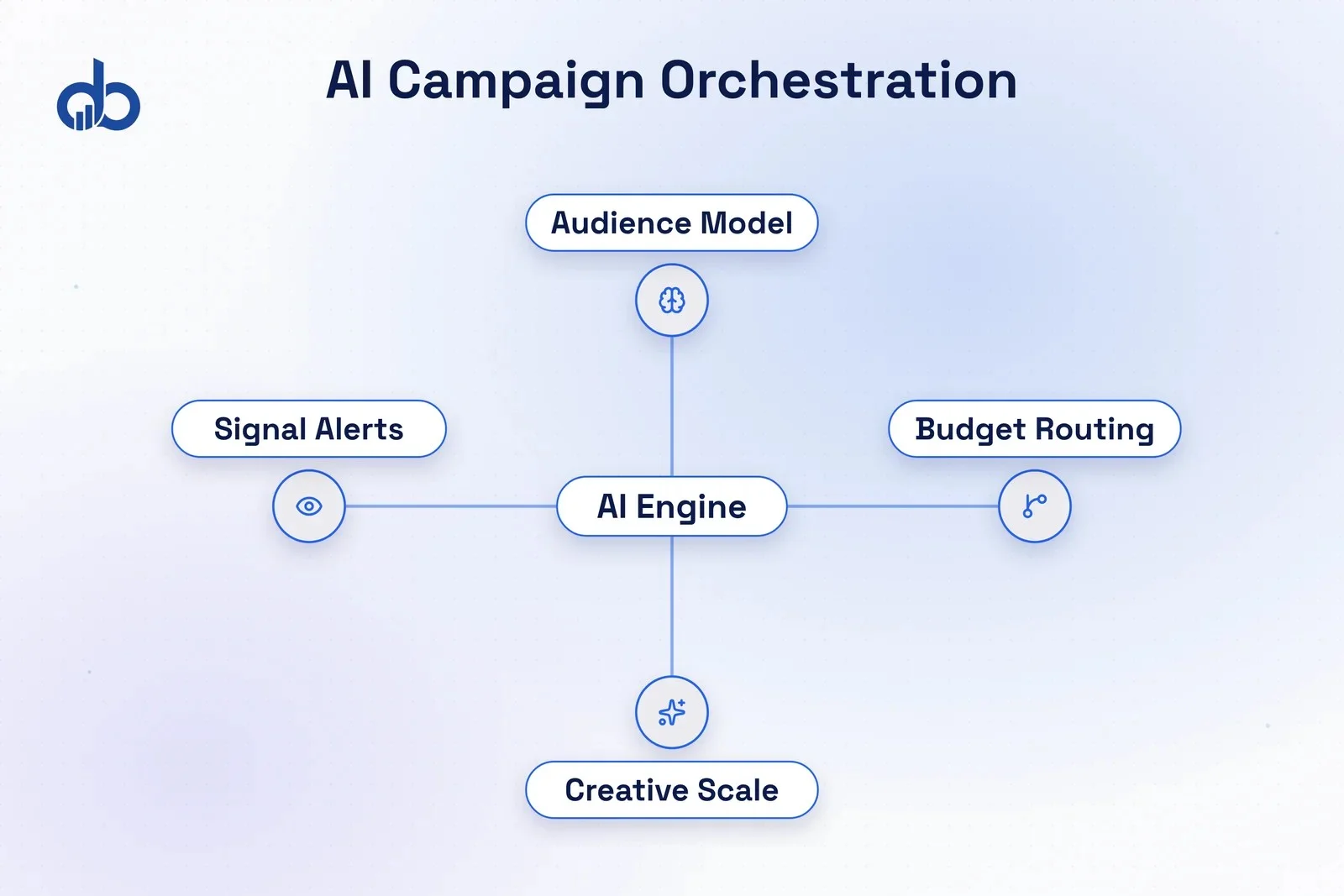
Two years ago, AI in marketing meant automating repetitive tasks: scheduling posts, testing subject lines, generating drafts. In 2026, AI-powered consulting has moved into campaign orchestration. AI systems now plan multi-channel sequences and adjust budget allocation in real time. They flag underperforming segments before a human analyst catches them.
For marketing consultants, this changes the scope of what a modern engagement delivers. AI-driven campaigns generate 22% higher ROI, 32% more conversions, and 29% lower acquisition costs than manually managed equivalents. That performance gap is wide enough that any AI-powered consulting practice not integrating orchestration into its workflow creates a compounding disadvantage for clients. And any consultant pitching AI as a feature of their proposal, rather than as the operating logic of their execution, isn’t delivering AI-powered consulting in practice.
What AI orchestration looks like in practice:
- Predictive audience modeling applied before campaign launch, not during post-campaign analysis
- Real-time budget reallocation between channels based on intent signal shifts
- Content variation testing at a scale no human team can replicate manually
- Automated anomaly detection on conversion data that flags issues before spend is wasted
At Digiblazon, our performance marketing service integrates AI orchestration across paid search, paid social, and content. Not as a dashboard feature, but as the operating logic driving daily campaign decisions. Performance Marketing
Want to see how AI orchestration applies to your current campaign structure? Get Free Marketing Audit
Trend 2: Personalized Marketing Has Shifted from Segments to Individuals
Ninety-three percent of marketers say personalized marketing improves leads or purchases. That figure has been directionally true for several years. What changed in 2026 is the level of personalization now achievable without enterprise-scale infrastructure.
Segment-level personalization means dividing your audience into groups and serving each slightly different content. Individual-level personalization is something else. It uses behavioral data, intent signals, and predictive modeling. It serves each person content calibrated to where they are in a decision process right now. The difference isn’t subtle: it’s the gap between “we email different segments different newsletters” and “every touchpoint adapts in real time to what this specific person has done and not done.”
Demand for personalized marketing experiences among businesses grew 42% in 2025. That demand isn’t being met by adding more audience segments. It requires a data infrastructure most businesses haven’t built.
What a personalization-ready consulting engagement covers:
- First-party data audit: What behavioral data are you currently collecting, and where are the gaps?
- Identity resolution: How do you connect the same person across channels, devices, and sessions?
- Content architecture: Are your assets structured for dynamic delivery, or designed for a mass audience?
- Signal mapping: Which customer actions should trigger which content or offer at which stage?
Pro tip: Most businesses discover their biggest personalization gap isn’t the platform, it’s the data. Before recommending any personalization tool, a good consultant will audit your first-party data collection and map exactly where the identity stitching breaks down. Without that audit, you’re personalizing a patchwork of incomplete signals.
Consultants who can answer all four questions before recommending a personalization platform are the ones producing measurable lift. Those who skip to platform recommendations are creating implementation debt their clients carry for months.
Trend 3: Data Analytics Is Now the Core Consulting Deliverable
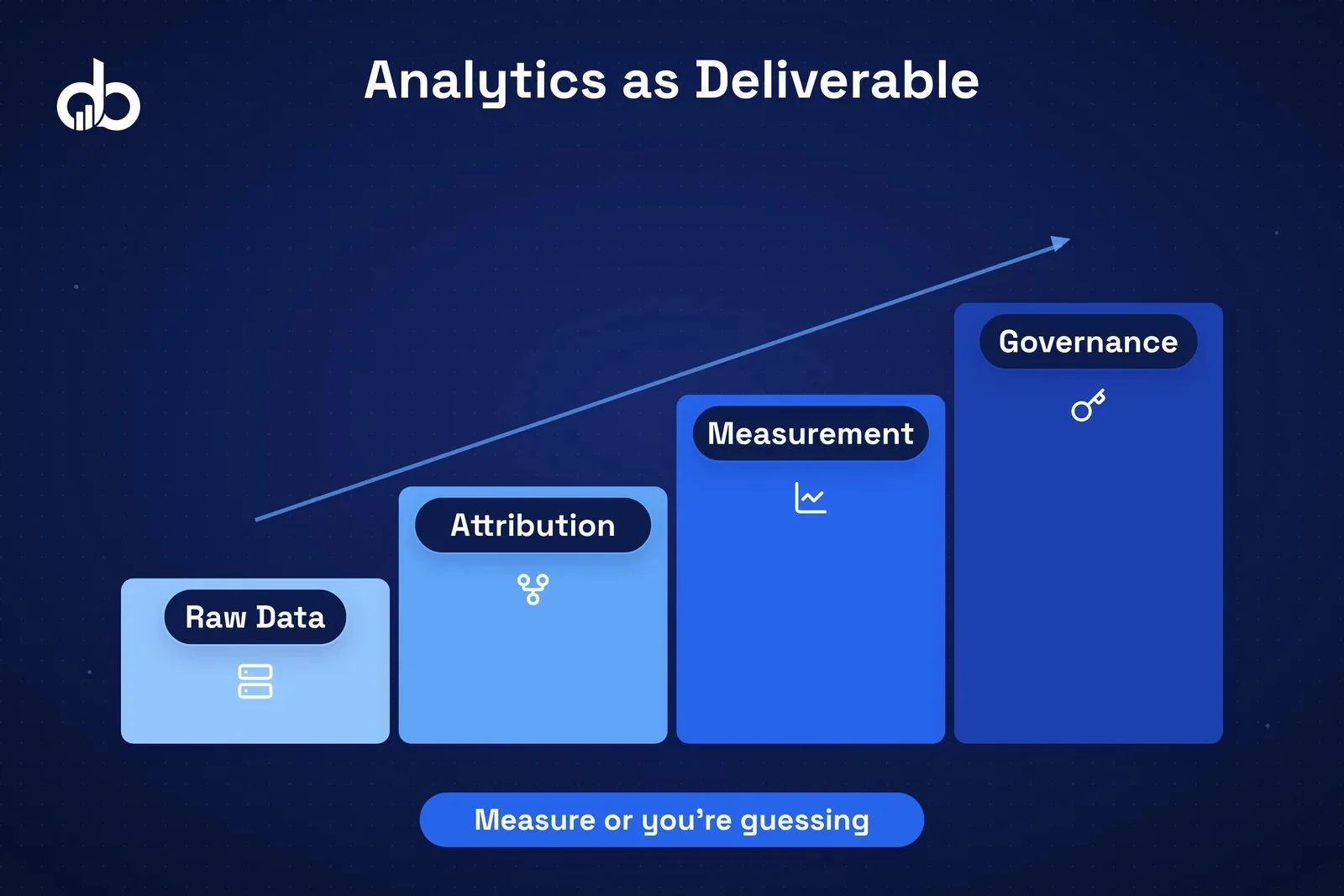
For most of the last decade, analytics in marketing consulting meant a monthly reporting deck: traffic, leads, conversions, and a section on “what worked.” In 2026, that model’s been replaced. Data analytics is now the primary deliverable, not the summary at the end.
McKinsey’s Global AI Survey found AI-driven analytics workflows deliver 3.2x ROI on average. That return doesn’t come from the analytics tool itself. It comes from the ongoing loop between data, insight, and decision. Consultants who own that loop for clients generate compounding returns. Consultants who hand off a strategy and let clients manage their own analytics generate one-time lift, then plateau.
The shift in marketing strategy consulting toward data ownership is visible in how retainers are now structured. They increasingly include tracking setup, attribution modeling, and measurement governance as core deliverables. If your current engagement doesn’t include someone accountable for the quality of your tracking data, you don’t have analytics as a deliverable. You have a PDF describing what the data might show if someone measured it correctly.
Want to see where your measurement stack is breaking down? Get Free Marketing Audit
Three signs your analytics setup is behind:
- Your CRM and ad platform data don’t agree on how many leads were generated last month
- You can’t attribute revenue to specific marketing activities with confidence
- Your monthly report shows traffic and leads but doesn’t show cost and margin at each funnel stage
If any of those hit close to home, the issue isn’t the analytics tool. It’s that no one owns the measurement infrastructure.
Common questions we hear on calls:
“How do we know if a consultant actually owns our measurement vs. just producing a report?”
Ask them to describe their attribution setup process and who’s responsible for tracking quality between cycles. A consultant who owns measurement will describe a specific infrastructure, a verification cadence, and what they do when the data breaks. A consultant producing reports will describe the report itself, not the system behind it.
“What does it cost to have measurement infrastructure built into a retainer?”
It adds to the engagement cost, typically 15-25% above a strategy-only retainer. But the alternative is allocating budget based on incomplete or misattributed data, which costs more than the infrastructure ever would. The ROI conversation flips quickly once attribution is clean.
Trend 4: Social and Creator-Led Marketing Enter the Strategy Brief
Social media used to sit outside the strategic consulting brief. It was a channel managed by a social team, separate from overarching marketing strategy. In 2026, that separation is no longer viable.
Businesses adopting omnichannel marketing strategies grew 33% in 2025. That growth was driven by the reality that social platforms have become full-funnel performance channels, not just awareness drivers. When a creator partnership can be tracked from first exposure to purchase, it belongs in the same strategy conversation as paid search and email.
Marketing strategy consulting in 2026 now includes social media positioning, creator partnership strategy, and platform-specific content architecture as standard scope. Consultants without frameworks for evaluating creator fit, structuring performance-based partnerships, or measuring social attribution are leaving a significant portion of the strategy uncovered.
Checklist: Is your marketing strategy consultant equipped for social-led growth?
- Can they define your social content strategy in terms of funnel stage and conversion objective?
- Do they have a framework for evaluating creator partnerships beyond follower count?
- Can they set up attribution for social-driven conversions that tracks through to revenue?
- Are social channels integrated into your marketing mix model, or managed independently?
Pro tip: The creator partnership question is where most consultants fall short. Follower count tells you reach. Engagement rate tells you resonance. But neither tells you whether a creator’s audience overlaps with your actual buyer. Before committing to a creator partnership, ask your consultant to map the audience overlap with your CRM. That one step separates campaigns that look good on paper from ones that close pipeline.
Creator-led content is now the most cost-efficient awareness and consideration channel for consumer and direct-to-consumer (D2C) brands. Consultants who treat it as an optional brand awareness tactic are giving you a strategy built on an incomplete picture of your audience.
Trend 5: Sustainability Has Moved into the Marketing Strategy Core
Sustainability used to arrive in the consulting brief at the end: “and we should figure out our ESG (Environmental, Social, and Governance) story for the website.” In 2026, that position has changed. Kantar’s Sustainable Marketing 2030 research found 94% of marketers say their sustainability agendas need to be more ambitious.
The shift isn’t primarily philosophical. It’s data-driven. Consumer purchasing decisions are increasingly influenced by brand values and environmental positioning. Supply chain transparency has become a differentiator in categories where it was previously invisible. And regulatory reporting requirements in major markets mean ESG is becoming a compliance input into the marketing brief, not just a values statement.
For marketing strategy consulting, this means purpose and sustainability now appear in the campaign brief at the positioning stage. Consultants who can audit brand purpose, test messaging for authenticity, and build claims that withstand scrutiny are delivering something their counterparts can’t match.
This doesn’t mean every business needs a full ESG strategy managed by its marketing consultant. It means the consultant needs to understand whether sustainability is a risk or an advantage in your category. They need to know how to position your brand without overreaching. One ecommerce client we work with discovered through a brand audit that their existing packaging practices gave them a genuine sustainability story they’d never told. It became a differentiator without requiring any operational change. The consultant’s job was to find it and build it into the positioning.
How to Choose a Consultant Built for These Trends
Knowing the five trends is useful. Knowing how to identify a consultant who’s built them into their practice determines whether your engagement produces results or activity.
| What to Ask | Trend-Ready Consultant | Dated Engagement |
|---|---|---|
| How do you measure success? | Owns attribution setup, tracks margin at each stage | Delivers monthly reporting decks |
| How do you use AI? | AI in planning, allocation, and real-time testing | AI mentioned in proposals, absent in execution |
| How do you approach personalization? | First-party data audit, identity mapping, signal strategy | Audience segmentation and A/B testing |
| What’s your social framework? | Full-funnel social strategy with attribution | Posting schedules and engagement metrics |
| How does brand purpose fit? | Integrated into positioning brief at the start | Separate comms workstream added at the end |
The right consultant for 2026 isn’t the one who mentions these emerging trends. It’s the one who can show you exactly where they appear in their delivery process. Ask for specifics. Ask to see the attribution setup they’d run for your business. Ask how they’d approach your first-party data gaps before recommending a personalization platform.
Digiblazon's marketing consulting engagements are built around ongoing data partnership, not project delivery. That structure is what produces compounding results rather than single-cycle lift. marketing strategy consulting
The Consulting Model Itself Is the Real Trend
The harder part is that each of these trends demands infrastructure, data ownership, and ongoing accountability that a project-based engagement can’t support. That gap between knowing and doing is exactly where consulting relationships stall.
Our Performance Marketing service is structured around the operating model these trends require. To see which of the five are missing from your current strategy, start with a Free Marketing Audit.
Is Your Marketing Strategy Built for What 2026 Demands? Get Free Marketing Audit
- AI-powered consulting tools in 2026 enable campaign orchestration across channels, not just task automation.
- Personalization has shifted from segment-level targeting to individual-level journeys driven by behavioral data.
- Data analytics is now the primary consulting deliverable — monthly reports have been replaced by continuous measurement frameworks.
- Creator and social-led marketing has entered the strategy brief, requiring consultants to integrate earned and paid channels.
- Sustainability has moved from brand messaging to a core marketing strategy consideration influencing channel and content decisions.
- The right marketing strategy consultant builds your measurement infrastructure first, not last.
- Evaluate consultants on their 2026 capability stack — AI tools, personalization systems, and real-time analytics ownership.
Frequently Asked Questions
What is marketing strategy consulting?
Marketing strategy consulting is a professional service where external experts assess a business's current marketing approach, identify gaps, and design a structured plan to achieve specific growth objectives. In 2026, it extends beyond recommendations to include implementation frameworks, AI tool integration, and continuous analytics oversight.
What are the biggest trends in marketing strategy consulting for 2026?
The five major trends are: AI tools moving from task automation to campaign orchestration, personalization shifting from segments to individuals, data analytics becoming the core consulting deliverable, creator-led marketing entering strategy briefs, and sustainability becoming a genuine strategic variable rather than a brand messaging layer.
How do I choose the right marketing strategy consultant?
Evaluate consultants on three dimensions: their AI and data tool stack, their track record with personalization at scale, and whether they deliver analytics ownership or just reporting. A trend-ready consultant will define success metrics before the engagement starts and build measurement infrastructure in the first 30 days.
What should a marketing strategy consultant deliver?
A modern marketing strategy consultant should deliver a structured growth roadmap, a measurement framework with clear KPIs, channel strategy aligned to your audience behavior, and either implementation support or detailed handoff documentation. In 2026, a data analytics infrastructure — not just a slide deck — should be among the primary deliverables.
How much does marketing strategy consulting cost?
Marketing strategy consulting typically ranges from $3,000 to $25,000 per month depending on scope, consultant experience, and deliverable depth. Project-based engagements for a single strategy audit range from $5,000 to $50,000. The most important factor is whether the engagement is structured around measurable outcomes — not hours billed.