
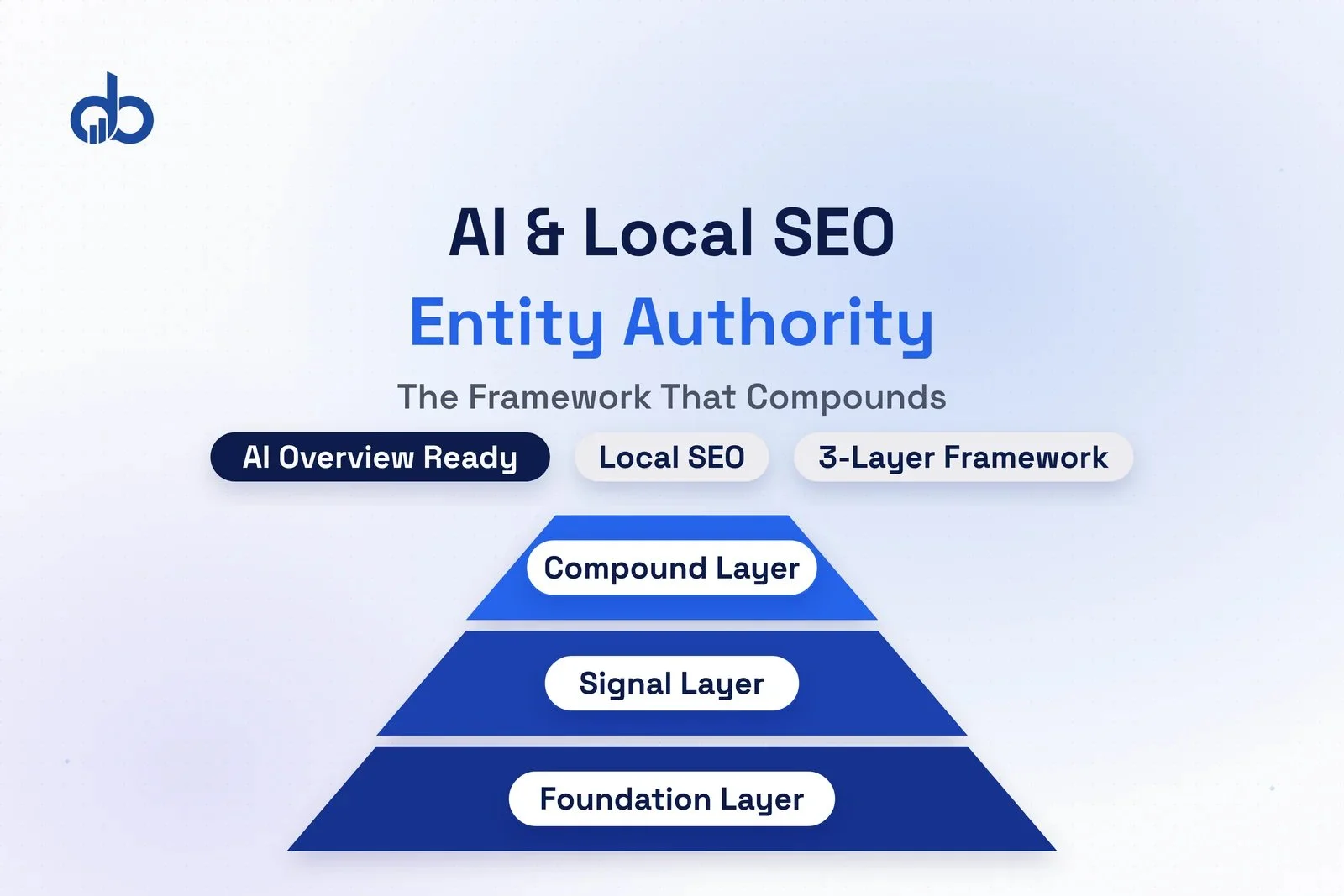
AI Overviews now appear for 68% of local searches. That number has been quoted in every local SEO newsletter for the past year. What gets mentioned less often is what it actually means for the businesses that used to appear in those results.
The AI impact on local SEO isn’t primarily about new tools. The standard response has been tactical: fill out your Google Business Profile completely, get more reviews, keep your citations consistent, add local content. Those are the right moves. But they assume the same game is still being played, just with a new player at the table. That assumption is wrong.
The businesses quietly pulling ahead understand that AI in local SEO has changed what the algorithm selects for. There’s a specific quality that compounds over time in AI-driven local search. Most local businesses aren’t building it. And it can’t be bought with a software subscription.
What the Local SEO Industry Keeps Telling You
The conventional playbook for AI in local SEO isn’t wrong. It’s incomplete.
The argument runs like this: AI Overviews and conversational search have made local intent more explicit. Users ask “best emergency dentist near me open now” instead of “dentist Boston.” That specificity favors businesses with detailed, category-specific Google Business Profiles. Reviews signal trust. NAP consistency signals reliability. Local content signals relevance. Businesses that automate these tasks faster will outpace competitors who do them manually.
This is true. All of it. The optimization floor has risen. Businesses with incomplete GBP profiles, sparse reviews, and inconsistent citation data are already losing ground they won’t recover easily.
The AI tools that have emerged to support this work (automated review drafting, GBP post scheduling, location page generators) are useful. They cut the time cost of maintaining the foundation every local business needs. Any local SEO strategy that ignores them is operating at a disadvantage.
The Standard Local SEO Playbook: What Still Works
- Google Business Profile completeness (all categories, services, hours, photos)
- Review velocity and response cadence (recency matters to AI systems)
- NAP (Name, Address, Phone) consistency across directories
- Local content with geographic and service specificity
- Schema.org LocalBusiness markup on your website
The problem isn’t that this playbook is wrong. Every competitor runs it too. When the floor rises for everyone, completion isn’t differentiation. In AI local SEO, undifferentiated entities don’t get recommended. They get ignored.
Wondering if your current local SEO setup is keeping pace with AI-driven search? Get Free Marketing Audit
Three Scenarios Where the Optimization-First View Gets It Wrong
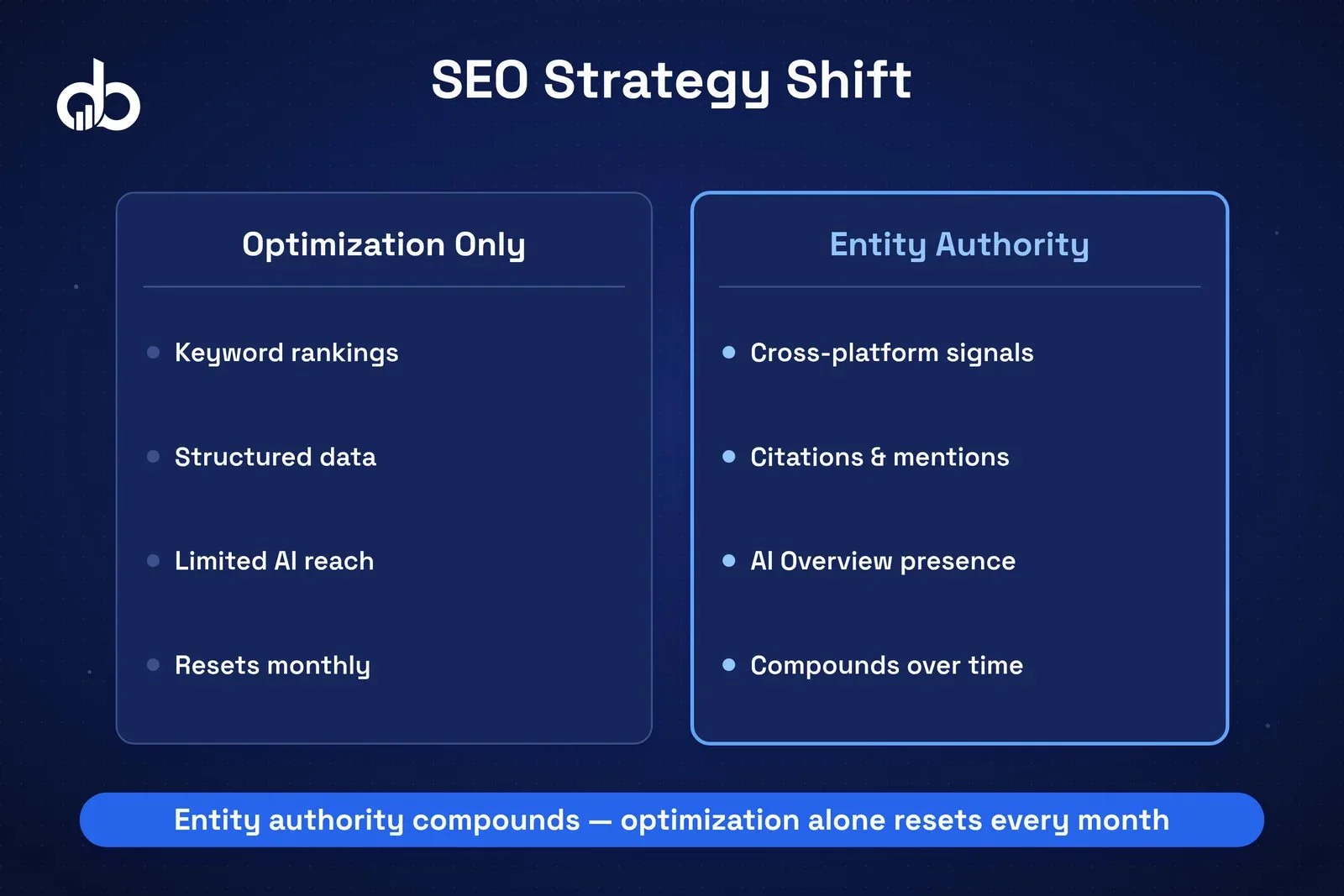
The limits of the optimization-first view become clear in three specific scenarios that local SEO tools can’t resolve.
Scenario One: Identical GBP Scores, Different AI Visibility
Two plumbing businesses in the same city. Both have complete GBP profiles. Both average 4.8 stars with 200+ reviews. Both have consistent citations. One appears in AI Overviews regularly. The other almost never does.
The difference isn’t in their GBP data. It’s in what exists beyond the GBP. The visible business has mentions in the local newspaper’s home improvement section, a listing in the state plumbing contractors’ association directory, and a presence on three home services platforms. A handful of organic mentions in local community forums rounds it out. The other business exists almost entirely within the Google ecosystem.
Here’s the thing: AI systems read local search the way a researcher reads a topic. They cross-reference sources. A business documented across multiple independent platforms carries a different credibility weight than one whose entire online presence lives inside Google’s own properties.
If your business only shows up inside Google's ecosystem (GBP, Maps, Search), you're building on a single source. AI systems treat single-source presence the same way a fact-checker treats a single-source claim: interesting but unverifiable. The fix isn't more GBP activity. It's building presence on platforms Google's systems read as independent.
Scenario Two: Keyword-Optimized but Entity-Invisible
Many local businesses built their online presence during the era of keyword-heavy local content. Service area pages, city-specific landing pages, and location-targeted blog posts designed to match query patterns. This content ranks in traditional search but frequently gets excluded from AI Overviews.
The reason is entity clarity. AI systems process these pages and find a lot of location-keyword combinations but limited information about what the business actually is, who it serves with specificity, or what makes it credible beyond geographic relevance. A page titled “Best Plumber in Atlanta” with thin supporting content reads to an AI system as keyword content. Not entity documentation.
Sound familiar? If you’ve built location pages and they’re not pulling AI visibility, this is likely why.
Scenario Three: Industry-Specific AI Caution Filters
For healthcare providers, legal professionals, and financial advisors, the AI local SEO challenge is more specific. Google’s E-E-A-T (Experience, Expertise, Authoritativeness, Trustworthiness) requirements apply more strictly to YMYL (Your Money or Your Life) categories. A healthcare provider with a complete GBP but no documented credentials, no association memberships, and no external clinical validation will face suppression. No amount of GBP optimization can fix that.
In these sectors, AI local search isn’t just a visibility contest. It’s a credibility audit. And the auditor doesn’t accept GBP completion scores as proof.
What the Data Actually Reveals About AI-Native Local Visibility
The statistics paint a picture that the tactics-first conversation consistently misframes.
AI Overviews appeared in 68% of local informational and hybrid-intent searches in Q2 2025. That reflects how aggressively Google is using AI to answer local queries before a click happens. For local businesses, this isn’t a traffic loss problem. It’s a sourcing problem: whose business does the AI choose to describe?
Seer Interactive’s September 2025 analysis found that organic CTR dropped 61% when AI Overviews appeared, falling from an average of 1.76% to 0.61%. The implication most commentators draw is pessimistic: local SEO is less effective. The implication they miss is more specific. The businesses getting clicks are the ones being cited inside the AI Overview, not the ones listed below it.
78% of local mobile searches still result in an offline purchase within 24 hours. The conversion link between local search and real-world business remains intact. The path to visibility has changed, but the destination hasn’t: a customer walking through the door. That’s why the stakes of getting AI local search right are as high as they’ve ever been.
Businesses with complete, active Google Business Profiles are 70% more likely to receive a visit from a searcher. But Google’s own research defines “complete and active” in ways that extend beyond GBP fields. Engagement signals, third-party mentions, and consistent entity documentation across the web all factor into what their systems consider credible.
The synthesis isn’t complicated. AI doesn’t pick the most optimized business. It picks the business whose existence and relevance it can most confidently verify across the greatest number of independent signals. That’s a different objective than traditional local SEO has been built around.
Common Questions About AI Local Search Visibility
“We have a 4.8-star rating and a complete GBP. Why aren’t we in AI Overviews?”
A complete GBP is the baseline, not the differentiator. If your profile isn’t pulling AI citations, the gap is almost always in what exists outside Google’s properties. Check whether you have even one earned mention in local press, a listing in an industry-specific directory, or reviews on platforms beyond Google. If the answer is no to all three, that’s your gap. Start there, not with more GBP edits.
“How long does it actually take to build entity authority?”
Most businesses see meaningful signal improvement in three to six months if they’re actively pursuing local press mentions, directory listings, and review diversity. But here’s the honest answer. Businesses that have spent years building community presence (sponsoring events, joining trade associations, getting quoted in local media) have a compounding advantage that can’t be replicated in a 90-day sprint. You can close the gap, but you can’t skip the work.
The Entity Authority Framework: Why Local Credibility Now Compounds
The businesses winning in AI local search aren’t doing something fundamentally different from good local SEO. They’re doing it with a specific objective in mind that changes which activities they prioritize.
That objective is entity authority: the quality of a business’s documented presence across the web as an independently verifiable, credible local entity. Unlike rankings, which can be won and lost in a single algorithm update, entity authority compounds. Each independent mention from a credible source increases the weight of all previous mentions. The system gets easier to win over time.
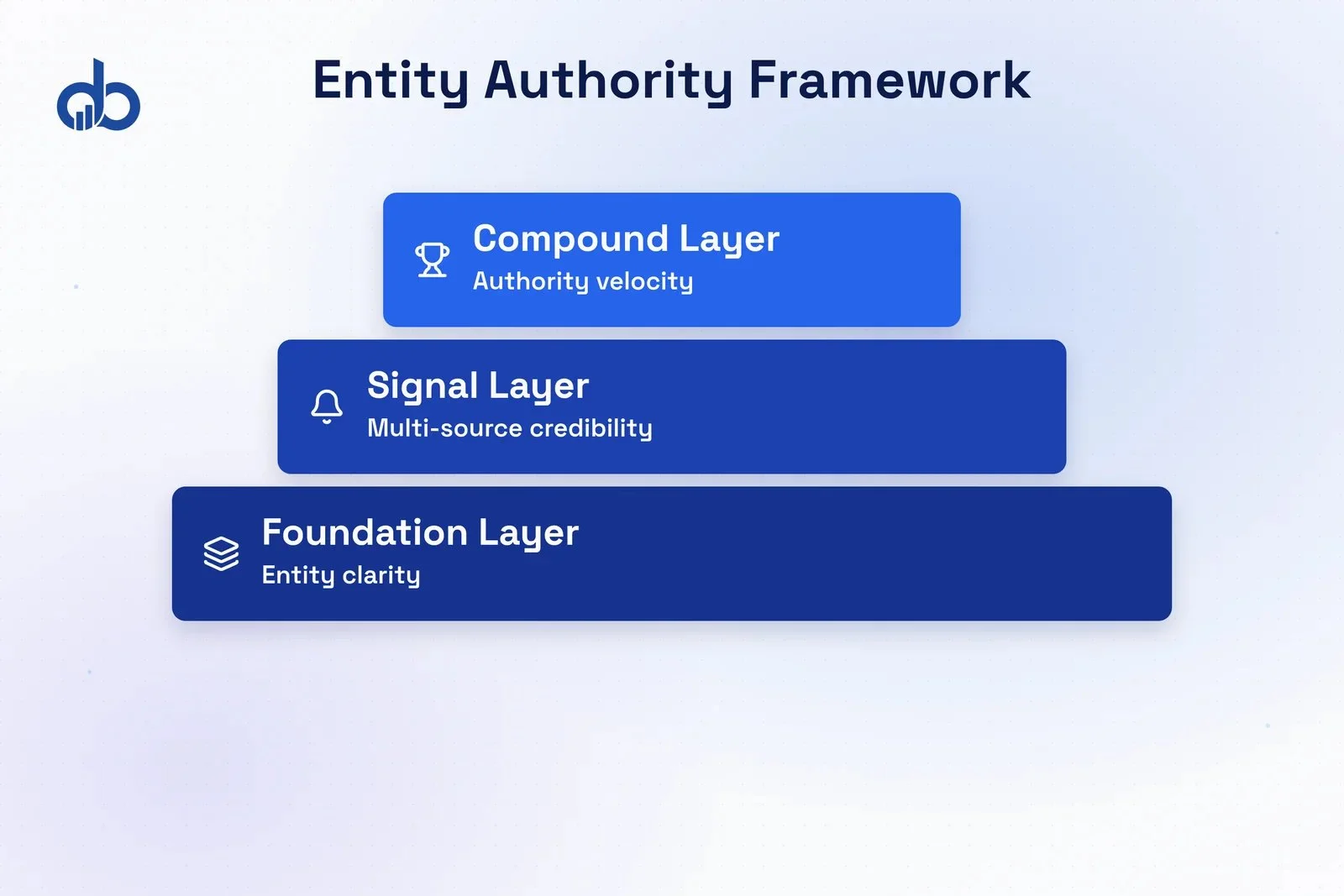
The Entity Authority Framework has three layers.
Foundation Layer: Entity Clarity
AI systems read the web the way a fact-checker reads a report. They look for consistent documentation of basic facts: business name, category, location, and service description. Any inconsistency across platforms is treated as a signal of unreliability.
Consider the business registered as “Mike’s Plumbing LLC” on GBP but listed as “Mike’s Plumbing Services” on Yelp and “Mike’s Plumbing Co.” on Angi. Every AI system reading those sources gets conflicting signals. The fix isn’t glamorous. It requires auditing and standardizing every business mention across all platforms and maintaining that consistency permanently.
In our entity audits with home services clients, we typically find 3–4 naming variations across platforms they weren’t even aware of. Fixing those inconsistencies, before doing anything else, is the fastest entity authority move available.
Before you build a single new signal, audit your existing entity data. Pull your business name from GBP, Yelp, Angi, Bing Places, Apple Maps, and your five most-cited industry directories. If you find more than two naming variations, fix those first. One hour of cleanup delivers more AI visibility lift than a month of new content.
Signal Layer: Multi-Source Credibility
The foundation establishes what the business is. The signal layer establishes that it matters. This is where the compounding mechanism lives.
Signals include earned reviews on platforms beyond Google, mentions in local press or industry publications, listings in category-specific directories, association memberships, community event participation, and organic mentions in local forums or community groups. These can’t be manufactured with a software tool. They have to be earned through actual business activity and relationship-building.
The businesses pulling ahead in AI in local SEO have spent years building these signals, often without knowing that’s what they were doing. They sponsored the local sports team. They got quoted in the local newspaper. They joined the chamber of commerce. Those activities, which traditional local SEO treated as brand-building rather than SEO, are now among the strongest signals available. (Yes, really. The chamber membership you’ve been ignoring is an SEO asset.)
Compounding Layer: Authority Velocity
As entity clarity and multi-source credibility accumulate, each new signal carries more weight than the previous one. AI systems develop confidence in the entity based on the volume and diversity of independent corroboration. A business that has earned consistent credibility signals over three years doesn’t just rank better than a new competitor. It becomes significantly harder to displace.
This explains why some businesses seem to dominate local AI search while others with similar budgets and tactics struggle. It’s not luck. It’s compounding credibility, built over time. The businesses that win are often those that built community presence before AI became a ranking factor. Their advantage isn’t just current effort. It’s accumulated signal depth that newer entrants can’t replicate quickly.
Treat your local entity presence like a portfolio. GBP is a single stock. AI local search rewards diversification: local press mentions, industry directory listings, chamber membership, association certifications, community forum participation. You don't need all of them at once. Add one new signal source per month and you'll have built a materially stronger portfolio in six months than most competitors have after three years of GBP optimization alone.
Entity Authority Audit: 8 Signals AI Systems Check
- Business name identical across all platforms (no abbreviations or variations)
- Category specificity (not “contractor” but “licensed residential HVAC contractor”)
- Services listed with enough detail to match conversational queries
- Active review responses on all platforms (not just Google)
- At least one earned local press or directory mention beyond GBP
- Industry-specific authority markers (licenses, certifications, association memberships)
- Schema.org LocalBusiness markup with complete attributes
- Geographic service area documented consistently
Ready to build an entity authority profile that AI systems can't ignore? Get Free Marketing Audit
What This Means for Local Businesses Competing in AI Search
The AI impact on local SEO isn’t that it’s become harder. It’s become longer.
Businesses that have treated local SEO as a monthly checklist (update the GBP, respond to reviews, post new content) are building the foundation layer. That’s necessary. But it’s not sufficient for AI local visibility in 2026. The signal layer requires a different kind of investment: time, relationships, and the kind of authentic community presence that neither AI tools nor GBP optimization can replicate.
For voice and visual search, the entity authority advantage compounds further. Voice queries are inherently conversational and intent-specific. AI systems answering them draw on the same multi-source credibility signals that power text-based AI Overviews. A business with strong entity authority across platforms is more likely to be spoken aloud by a voice assistant than one with a well-completed GBP but no independent corroboration.
For regulated industries, the implication is more immediate. Healthcare providers, legal professionals, financial advisors, and insurance brokers should treat professional credentials, association memberships, and published expertise as front-line SEO assets. Not because they signal E-E-A-T to a human reviewer, but because AI systems in these categories apply significantly stricter entity verification before citing a business. A credential listed in a professional directory carries more weight than five additional GBP photos.
The hybrid approach that works in AI local SEO is this: use AI tools to automate the foundation layer. Let software maintain GBP consistency, draft review responses, and schedule local content. Then invest the time saved into the signal layer: earned mentions, community relationships, and professional credentials that can’t be automated.
This isn’t a new marketing principle. It’s the old one, correctly applied to an AI-first environment. And understanding the AI impact on local SEO is what separates businesses that execute this well from those still running a 2022 playbook.
Entity Authority Is the New Local SEO
You now have a framework that explains why AI in local SEO favors some businesses while others with identical GBP scores remain invisible. The gap between understanding the framework and building the authority is real. Entity authority compounds, but it requires consistent investment across foundation, signal, and credibility layers that most tactical playbooks don’t address.
Our SEO & Organic Growth service is built around this kind of structured local authority building, not just GBP management. If you want to see where your current entity presence stands and what AI systems are reading about your business, start with a Free Marketing Audit.
- AI Overviews now appear in 68% of local searches — the businesses cited inside them have multi-source entity authority, not just optimized GBP profiles.
- Entity authority is built across three compounding layers: Foundation (entity clarity), Signal (multi-source credibility), and Compounding (authority velocity).
- AI systems read the web like a fact-checker: a business documented only within Google's own ecosystem carries less credibility than one with independent third-party mentions.
- Audit your business name consistency across all platforms before building new signals — naming inconsistencies are the fastest entity authority fix available.
- Traditional brand-building activities (local press mentions, chamber memberships, trade directory listings) are now among the strongest AI local search signals available.
Frequently Asked Questions
How is AI changing local SEO in 2026?
The AI impact on local SEO is a shift in what algorithms prioritize: from keyword optimization and GBP completeness to entity authority — the verifiable, multi-source credibility of a business across the web. Businesses cited in AI Overviews are those with consistent documentation across independent platforms, not just well-filled Google Business Profiles. The conversion link remains strong; 78% of local mobile searches still lead to offline purchases within 24 hours.
Does AI hurt local SEO rankings?
AI Overviews reduce organic CTR by 61% on average for queries where they appear. But this affects businesses below the AI Overview, not those cited within it. Strong entity authority signals — earned reviews, local press mentions, consistent citations across independent platforms — are what get a business cited inside the Overview, not pushed below it.
How do I make my local business show up in AI Overviews?
The pathway follows three steps: establish entity clarity (consistent name, category, and services across all platforms), build multi-source credibility (earned reviews, directory mentions, local press, association listings), and implement LocalBusiness Schema markup on your website. There is no shortcut that bypasses independent verification — AI systems read the web as a network of sources, and a business documented only within Google's properties will consistently lose to one with broader, earned credibility.